
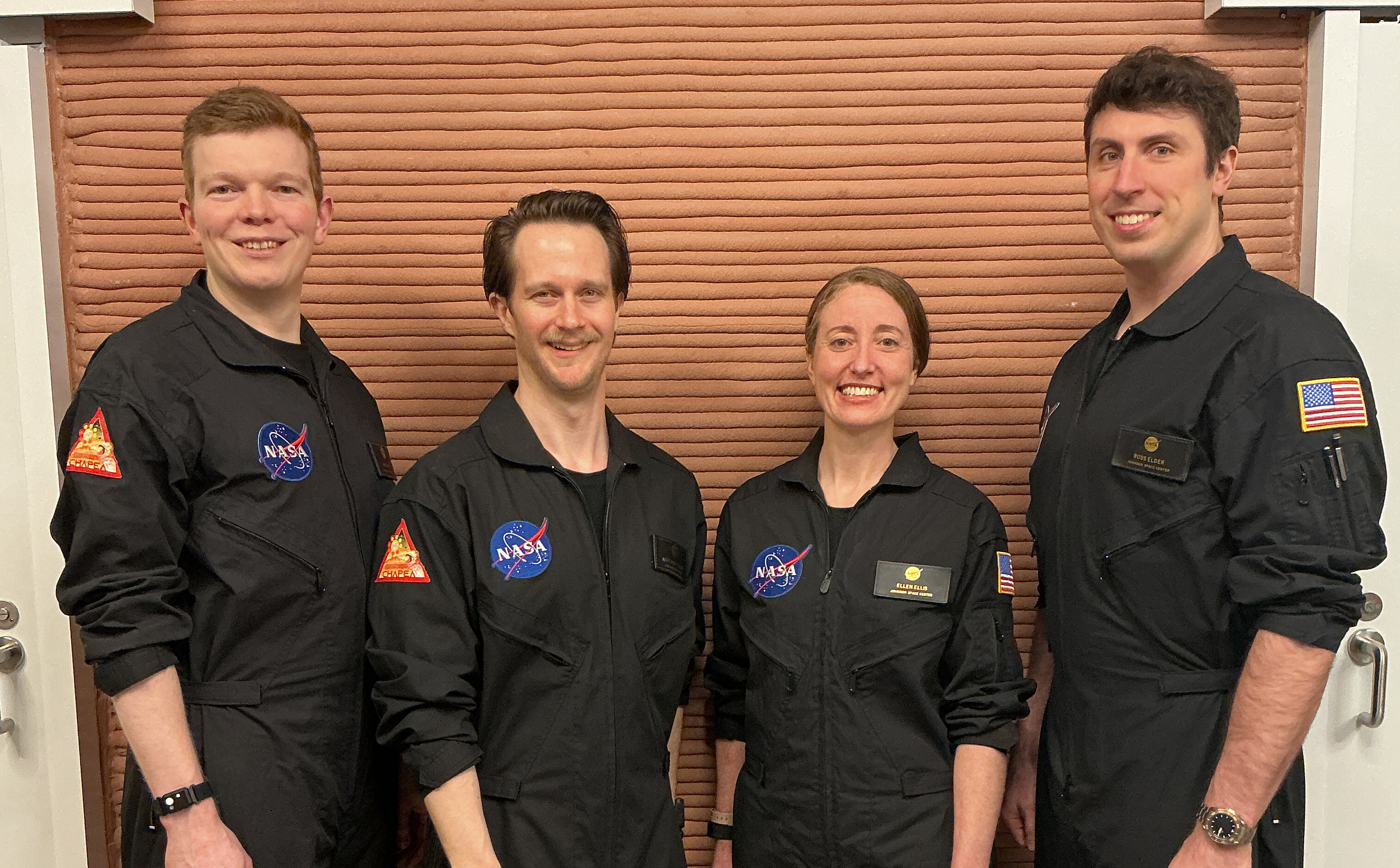
Be honest: could you share a small flat with three colleagues for a whole year? No popping out for milk, no meeting friends, and every message home takes ages to arrive. Ross Elder, Ellen Ellis, Matthew Montgomery and James Spicer said yes.
They went in on 19 October 2025 and come out on 31 October 2026. Yes, Halloween. They won't even need costumes: they've been dressing up as astronauts all year.
Where is this “Mars”?
In Houston, at NASA's Johnson Space Center. The habitat is about 158 square metres, roughly a big family house, and it was 3D-printed. Outside there's a fake red “Mars” surface, so they put on suits and go for Marswalks.
What do you do all year?
They grow vegetables, fix things that break, work with robots, exercise and run experiments. NASA's photos show them doing medical drills and playing the music instruments they brought from home.
The hard part is the waiting. A message to “Earth” and back can take a long time: 22 minutes, NASA said at the start, and up to 45 minutes each way by the one-year mark. So if something breaks, you can't just phone Houston. Houston is next door, but pretending not to be.

They're not the first
A first crew did the same 378 days and came out in July 2024. One of them, Kelly Haston, called it “a unique experience with great challenges, joys, and sorrows.” NASA plans three of these missions. This is number two.
So why bother?
Because a real Mars crew will be on their own, millions of kilometres away. Before anyone goes, NASA wants to know how people stay healthy, calm and friendly when nobody can pop round. After two weeks of debriefing, the scientists dig into a year of data.
And somewhere in Houston, four people are about to have the best takeaway of their lives.