

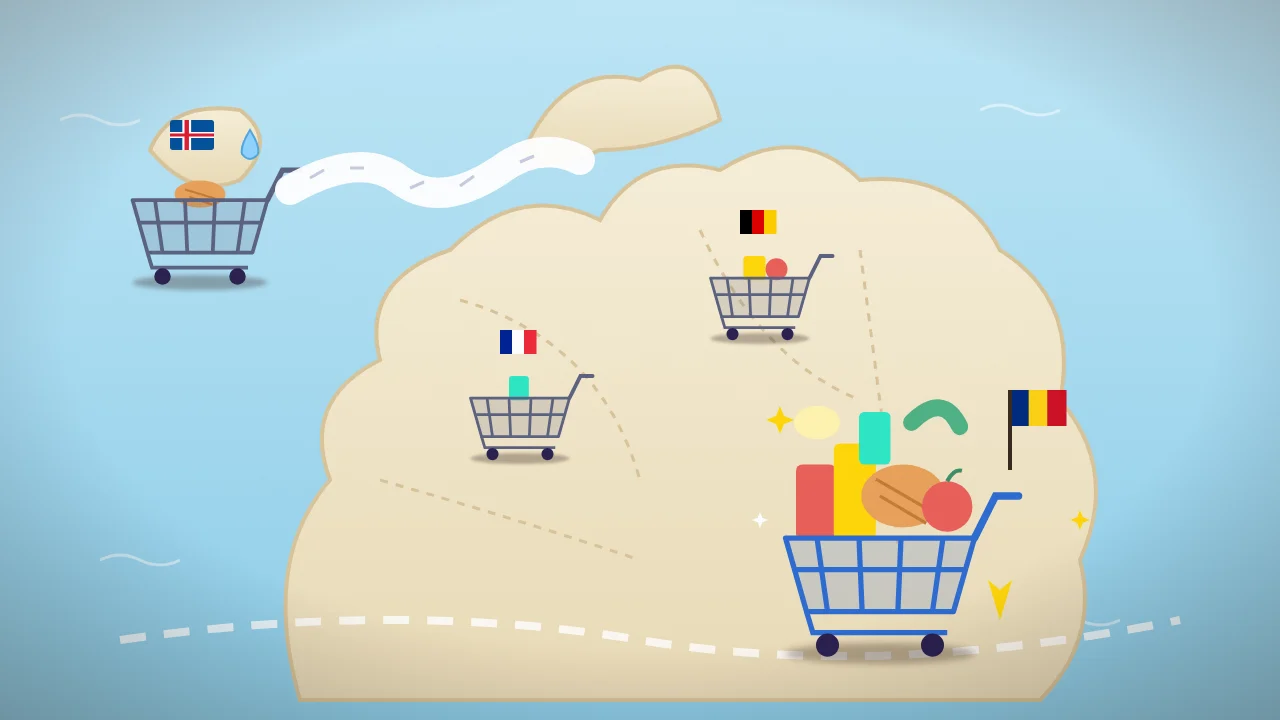
Imagine filling the exact same shopping basket in every country in Europe. Same bread, same haircut, same bus ticket. Eurostat, the EU's statistics office, does exactly that, with more than 2,000 goods and services. The EU average is set at 100.
The cheapest and the priciest
Inside the EU, Romania is the cheapest country, at 58.9 on the broad measure that also counts public services like health and schools. Luxembourg is the most expensive, about 2.5 times pricier than Romania.
Add the rest of Europe and the gap gets even bigger. Iceland is 83.7% above the EU average and North Macedonia is the cheapest, at 49.7. That's a 3.7-times difference for the same basket. Switzerland, Denmark, Ireland and Norway are also near the top.
Counting only what households pay out of pocket, the 2025 figures put Denmark highest at 140, and Bulgaria and Romania lowest, at 63 and 65. So whichever way you count, Romania is among the cheapest places to shop in the EU.
Where the gaps are biggest
Food is actually where countries are closest: from 122 in Luxembourg to 80 in Romania. Housing is a different story, from 190 in Ireland to 41 in Bulgaria. And education swings the most, from 334 in Luxembourg to 42 in Romania.
Among the big four, Germany is the priciest, 9.1% above average, and Spain the cheapest, 8.9% below. Italy sits just under average at 98.
The catch
Cheap prices don't mean an easy life. These numbers compare prices, not wages. Economist Robert Inklaar, from the University of Groningen, says “the figures should always be read together with earnings,” and that “the biggest single reason prices differ across Europe is that wages differ.” Switzerland is expensive, but Swiss pay is too.
So next time a friend from Copenhagen visits, take them for coffee. They'll think it's on sale.