

If your teenager has been talking about "the blockade" over dinner, you're not alone. Since late September, young people in a string of European countries have walked out of class and into the streets. Most of it has been peaceful. Some of it really hasn't. Here's the story, calmly.
It started with a crowded classroom
The spark was a school in Créteil, a suburb of Paris, on 21 September. Teachers had gone on strike a few days before, and students joined them. Their complaints are the kind any parent will recognise: classes of 32 to 36 pupils, not enough teachers, old buildings, and the stress of Parcoursup, the online system that decides who gets into university. During this year's heatwaves, some students said their classrooms hit 40 °C.
Within ten days, around 1,000 high schools in France were involved. On 6 October, unions counted 450,000 people marching. The government said 250,000. Both numbers are big. And like every protest ever, nobody agrees on the count.
Then it spread
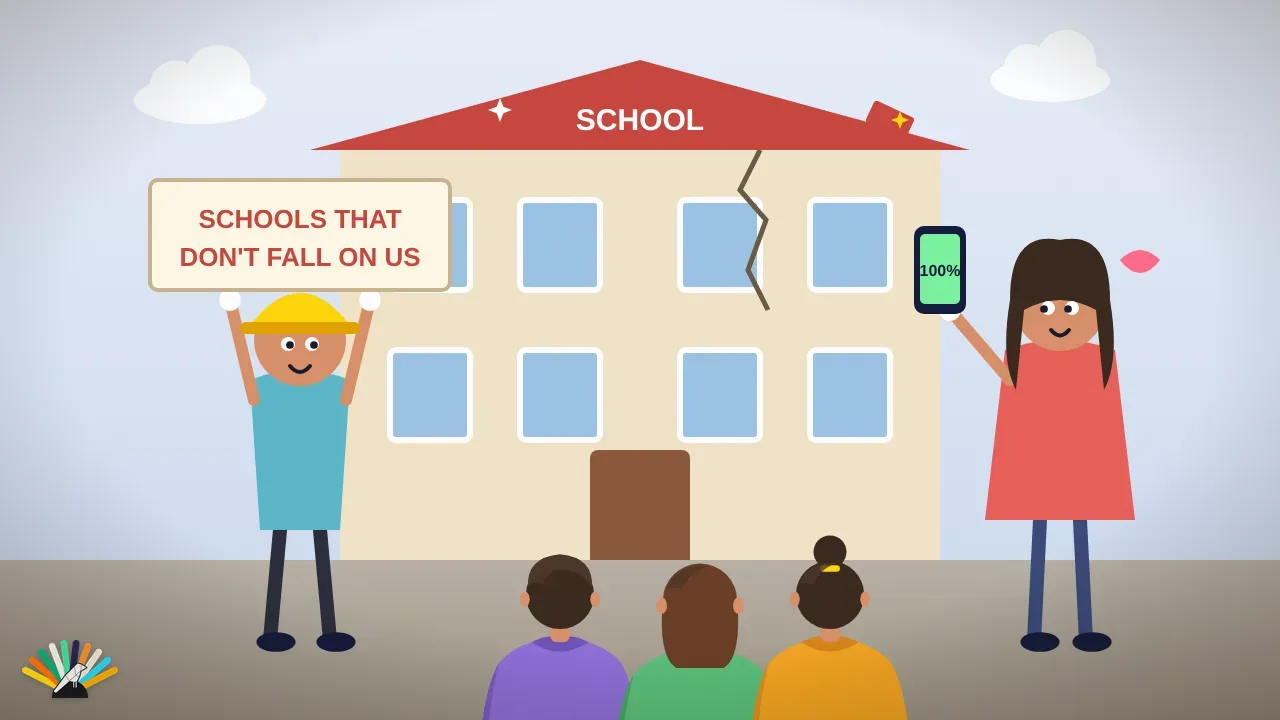
French students have protested every autumn for nine years, but this time the mood travelled. In Italy, students occupied a high school in Rome on 7 October, and marches followed in Milan, Turin and Bologna. One Italian student leader put it simply: they want "schools that don't collapse on our heads".
In Spain the trigger was housing. The eviction of an 87-year-old woman in Madrid, who later died in hospital, set off weeks of tent camps in the city centre. A 20-year-old waitress at the camp said "most of my paycheck goes to the rent". Spain's minimum wage is €1,221 a month, and an average 80 m² flat costs about €1,130 to rent. Do that maths at 20 and you'd camp out too.
Students also marched in Albania, Greece, Belgium and Portugal. A French student union leader, Alice de Brito, said: "I see so many more similarities than differences".
So what do they actually want?
It's not one list, but the themes repeat: schools that work, homes young people can afford, decent jobs, and public services that don't fall apart. An editor who follows youth politics across Europe said the protests show a feeling that "Europe's politics is failing to deliver for the next generation".
The part that worries parents
Most marches were peaceful, with hundreds of thousands walking without trouble. But in France, some nights turned ugly: looting in Paris, Marseille, Lyon and Bordeaux, schools set on fire, and the old City Hall in Limoges badly damaged. In one weekend, police made 2,400 arrests. Many of those detained across the weeks were minors. In Milan, 271 people were arrested after riots, mostly minors too.
President Macron said "those who looted will have to pay for the damage". The French justice minister asked prosecutors to look at making parents pay for damage caused by their children. The government blamed far-left activists, who deny it and say the movement is spontaneous. Amnesty International, on the other side, called some of the police force "disproportionate".
If your kid wants to go
Wanting a better school is not a crime, and peaceful protest is a right. But a crowd can change in minutes. If your teen is going, talk first: who they're going with, where they'll meet if separated, and that they leave the moment things turn. Keep the phone charged. And maybe ask them what they're marching for. You might find you agree on more than you think.
Germany and the UK have student days of action planned for the coming weeks. This isn't over yet. Watch this space, and keep the dinner-table conversation going.