
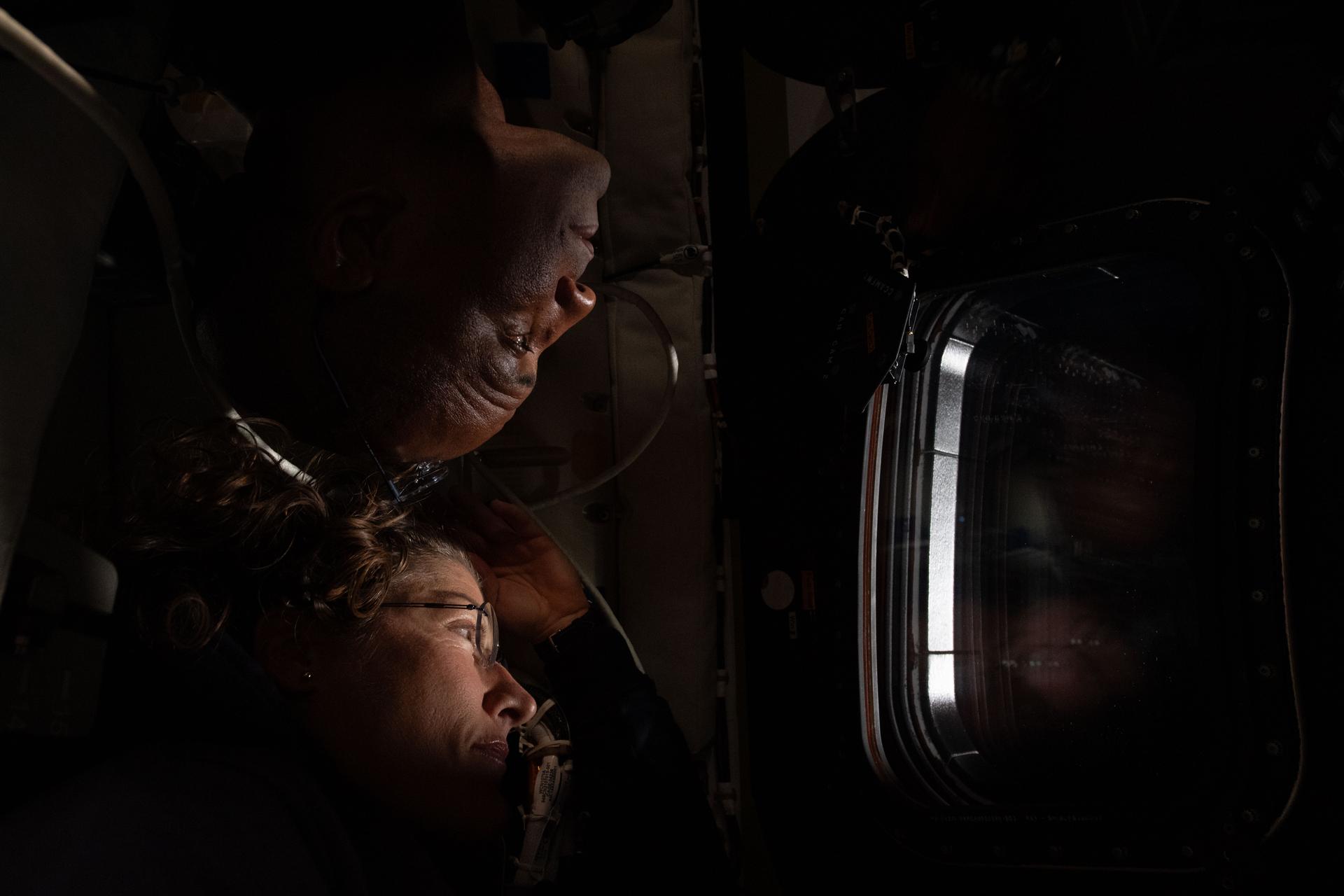
In April 2026, four people did something nobody had done since 1972: they flew around the Moon. The Artemis II crew didn't land. But on 6 April, during their lunar flyby, they turned into the most expensive nature photographers in history. Now NASA has released what they brought back, and it's free for anyone.
Who was up there
The crew were NASA astronauts Reid Wiseman, Victor Glover and Christina Koch, plus Jeremy Hansen from the Canadian Space Agency. During the flyby they took turns: one taking photos, one writing notes, one describing out loud what they saw.
What's in the box
The archive is huge: more than 800 gigabytes. Inside are over 11,000 full-resolution photos and videos from the astronauts' handheld cameras and from the Orion spacecraft. There are also 8.5 hours of audio, the crew talking through what they were seeing, plus pictures they annotated by hand. NASA calls it "the first planetary science dataset captured primarily by humans in more than half a century".
Why does that matter, when robots have photographed the Moon millions of times? Because people notice different things. NASA says the crew's quick choices of what to shoot, their sense of colour and their reactions to changing light add something to decades of Apollo and robot data. A camera records everything. A human says, "Wait, look at that."
The flashes
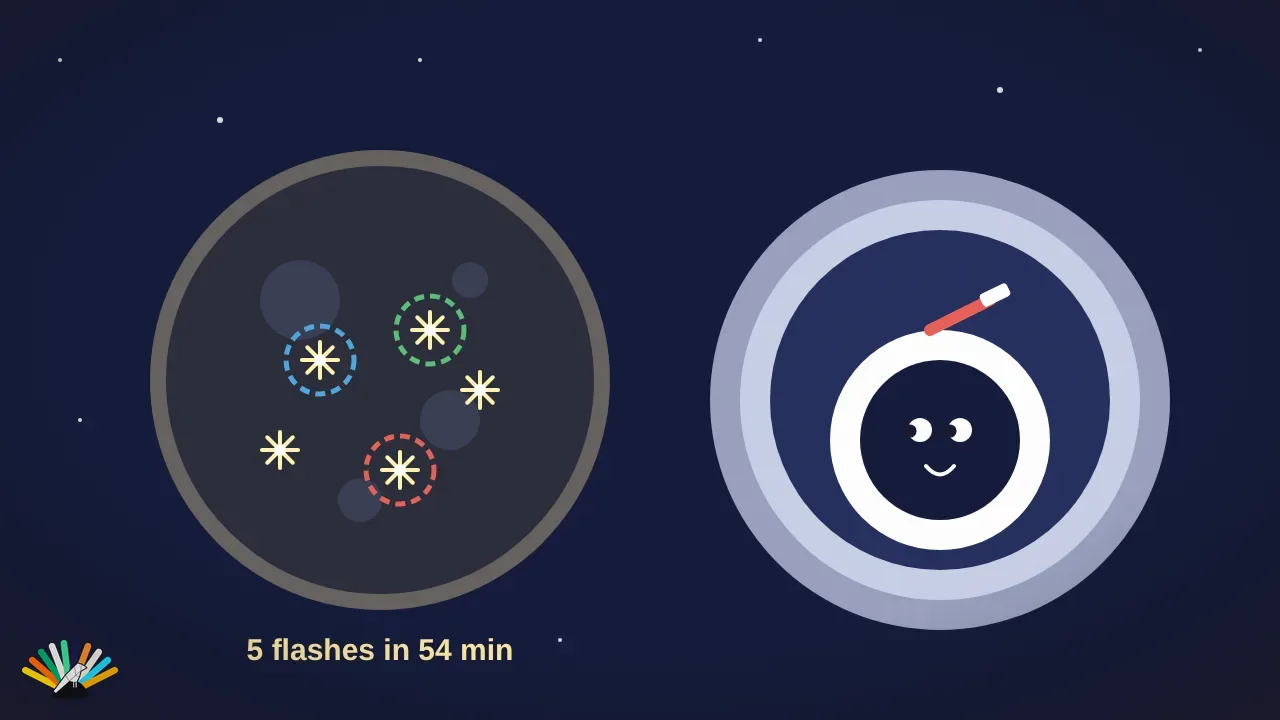
Here's the exciting bit. At one point, the Moon passed in front of the Sun from the crew's point of view, a kind of eclipse. With the Moon dark, they saw tiny flashes of light on its surface. Those were impacts: small space rocks hitting the Moon at enormous speed.
They recorded five of them during a 54-minute eclipse. A screenshot from a crew tablet shows the flashes circled by hand, with Wiseman writing in blue, Glover in green and Hansen in red. Some circles were probably the same impact seen at different moments. Imagine being an astronaut, seeing a flash on the Moon, and grabbing a felt-tip pen. That's science.
Why do scientists care? Counting flashes helps estimate how often centimetre-sized pieces of rock hit the Moon. That matters for anyone planning a base, a rover or a long stay there. Nobody wants to build a house where it hails rocks.
Shades of grey
The photos also show differences in colour, brightness and texture between regions, which can help improve maps of what the lunar soil is made of. The crew described shades of grey and black, craters and old lava flows. Many pictures were taken near the line between day and night on the Moon, where the sun is low and shadows are long. That's exactly the kind of light future astronauts will face when they land near the lunar south pole.
What happens next
NASA says the archive is already helping plan Artemis III, the mission meant to put people back on the surface. It's aimed at geologists, planetary scientists, engineers and many others. But it's public, so you can look too.
What it means for you
You don't need a rocket to enjoy this. Somewhere in that archive is a photo of the Moon taken by a human hand from a window, with a person next to it who couldn't believe what they were seeing. The first Moon pictures were for a few scientists. These ones are for everyone. Have a look on a quiet evening. It's a lot more relaxing than your phone gallery.