

Cats sleep on our beds, sit in our sunny windows and breathe the same air in our living rooms. So maybe it shouldn't be a surprise that, when they get cancer, it can look a lot like ours. Scientists have now proved it with the biggest study of cat cancer ever done.
The study
An international team led by the Wellcome Sanger Institute in Cambridge, England, read the DNA of 493 tumour samples from pet cats in five countries. They covered 13 types of cancer, including breast, blood, bone, lung, skin, gut and brain tumours. For each one, they checked about 1,000 genes already known to be involved in human cancer. The results were published in the journal Science. It's described as the first big genetic map of cat cancer.
Senior author Louise Van Der Weyden called it "one of the biggest-ever developments in feline oncology". Oncology is the science of cancer. Feline means cat. So, a very big deal for cat cancer research.
What they found
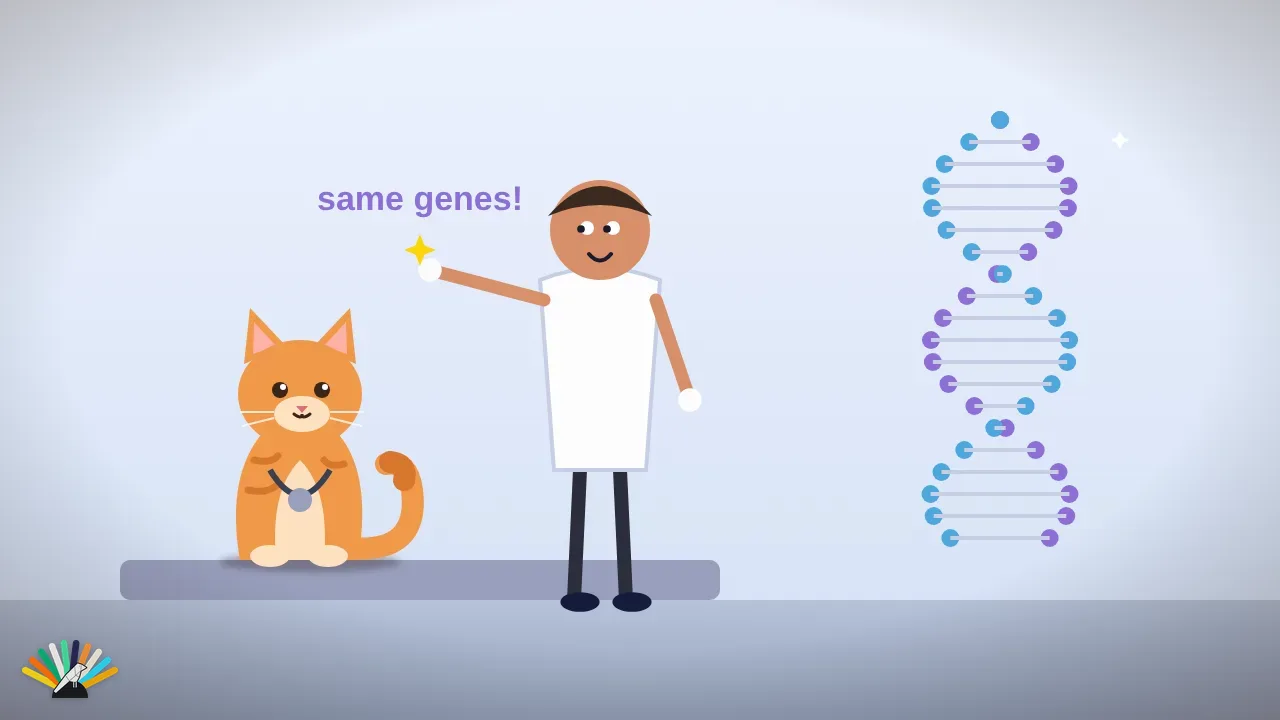
The headline: many of the genes that drive cancer in cats are the same ones that drive it in people. Some cat cancers share genetic changes with human and dog cancers too.
The most often damaged gene was TP53, changed in 33% of the cat tumours. In humans, TP53 is famous among scientists as a kind of cell guard that stops damaged cells from multiplying.
Breast cancer in cats was especially interesting. A gene called FBXW7 was changed in more than half of the cat breast tumours. In women with breast cancer, changes in that same gene are linked to a worse outlook. A second gene, PIK3CA, was changed in 47% of cat breast tumours, and it's also found in human breast cancer, where drugs that target it already exist.
And here's one any sunbather will recognise: many cat skin cancers were linked to UV light, just like in people. Yes, cats can get too much sun. White-eared cats lying in windows all summer, we're looking at you.
A drug clue
In the lab, some chemotherapy drugs worked better against cat breast tumours with the FBXW7 change. This was tested on tissue grown in dishes, not on real cats or people, so it's an early clue, not a treatment. Still, it's the kind of clue that could help vets choose better drugs, and maybe one day help doctors too.
Why cats, and not mice?
Lab mice live in clean cages. Cats live with us. As Bruce Kornreich from the Cornell Feline Health Center put it, "cats are exposed to similar environmental conditions as humans". They share our air, our floors and our sunny windows. And they get many of the same diseases. That makes them a natural partner for studying how our surroundings may play a part in cancer.
Co-senior author Geoffrey Wood, from the Ontario Veterinary College in Canada, said it simply: "Our household pets share the same spaces as us". And co-author Latasha Ludwig from Cornell said the work confirms that the cat "is not just a beloved pet, but a vital partner in the fight against cancer".
What it means for you
No one is experimenting on your cat. These were tumours from pet cats that were already sick and being treated. The team has made all the data free for researchers everywhere. If your cat gets a lump, see the vet early, just as you would for yourself. And if your white cat loves the summer windowsill, a little shade wouldn't hurt.
For once, the cat isn't just taking over your sofa. It's helping science. Don't tell it. It's smug enough already.