

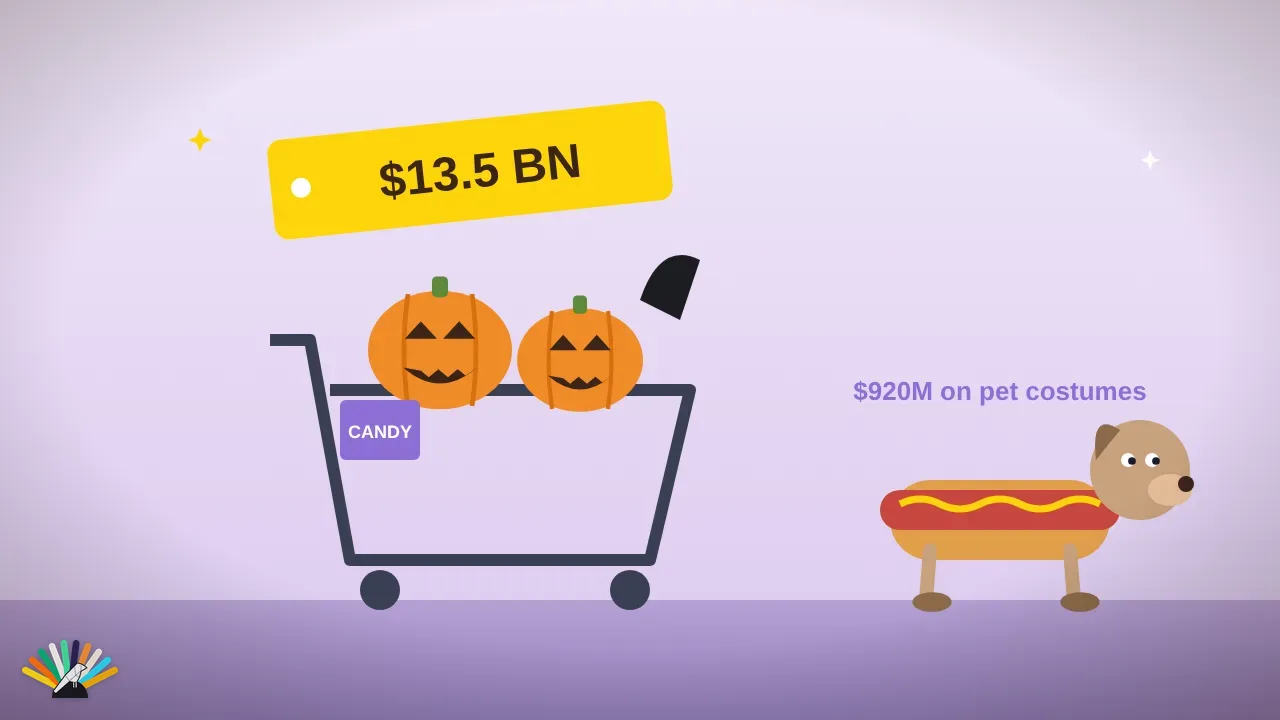
Halloween used to be a sheet with two holes cut out. Now it's an industry. This year, Americans are expected to spend a record $13.5 billion on it. That's up from last year's record of $13.1 billion. Somewhere, a ghost is counting the money.
How much per person?
The forecast comes from the National Retail Federation, the big US shops' association, which surveys people every year. The average person plans to spend $115.14, up a little from $114.45 in 2025. About 74% of Americans say they'll celebrate, compared with 73% last year and 68% back in 2019. So more people are joining in, and each one spends a bit more.
Where the money goes
Three things eat almost the whole budget, and they're nearly tied:
Costumes: $4.4 billion. Decorations: $4.3 billion. Candy: $4.1 billion.
Almost everybody buys candy: 96% of people celebrating. About 78% buy decorations and 71% buy costumes. Greeting cards add another $800 million, and 42% plan to buy one. Yes, people send Halloween cards. No, we didn't know either.
The costume ranking
Adults will spend about $2 billion on their own costumes and $1.5 billion on the kids'. Children mostly want to be superheroes and comic book characters, then princesses, witches and ghosts. Grown-ups go for witches, vampires, Batman and Spider-Man. Apparently nobody wants to be an accountant, even though that's the scariest job.
And then there are the pets. Americans will spend around $920 million dressing up their animals. The top pet costumes? Pumpkins, hot dogs and ghosts. A dog dressed as a hot dog is the kind of joke that never gets old, and the dog has no say in it.
Why do people go all in? For many, it's simply the mood. In the same survey, 42% of early shoppers said they look forward to autumn, and 34% named Halloween as one of their favourite holidays. Pumpkin season has fans.
Smarter shopping
It's not all wild spending. About a third of people plan to shop around for the best prices, and 26% are hunting for coupons and sales. Around 34% want to buy things they can reuse or repurpose next year. About half started shopping in September or earlier.
Discount stores are the top place to buy, followed by specialty costume shops and online stores. And here's a sign of the times: almost half plan to use AI tools, mostly to brainstorm costume ideas and plan parties.
Allison Zeller from the NRF said shoppers "continue to make Halloween a spending priority" while keeping affordability in mind. She described them as "thoughtful and strategic". Translation: people love Halloween, but they also check the price tag twice.
Wait, is it really a record?
In dollars, yes. But careful: the 3.8% rise isn't adjusted for inflation. When everything costs more, spending more doesn't always mean buying more. Part of that record is just pricier chocolate and pricier plastic skeletons.
What it means for you
Halloween is growing outside the US too, including in Romania, so these habits tend to travel. If you want the fun without the bill, steal the smart tricks: reuse last year's decorations, swap costumes with friends, buy candy on sale and keep your eyes open on 1 November, when the leftovers get cheap.
Or do it the classic way. One old sheet. Two holes. Total cost: zero. Still terrifying.