

Picture a company so big it owns more than a billion dollars of stuff. Factories, trucks, brands you know. Now picture it walking into a bankruptcy court. In the year to June 2026, that happened 28 times in the US.
More than usual, even on a quiet year
Twenty-eight is actually down from 32 the year before. Good news? Sort of. The long-run average since 2005 is about 23 a year, so we're still above normal. Count all large companies, not just the giants, and the first half of 2026 was the busiest since 2010: 372 filings in six months.
Why do giants fall?
Researchers read the papers these companies file on day one, where they explain themselves. The top reason, in 73% of cases: people simply bought less. Next came lawsuits, rules and politics (65%), then inflation (58%) and expensive loans (38%). Tariffs got the blame five times.
The one in your garage
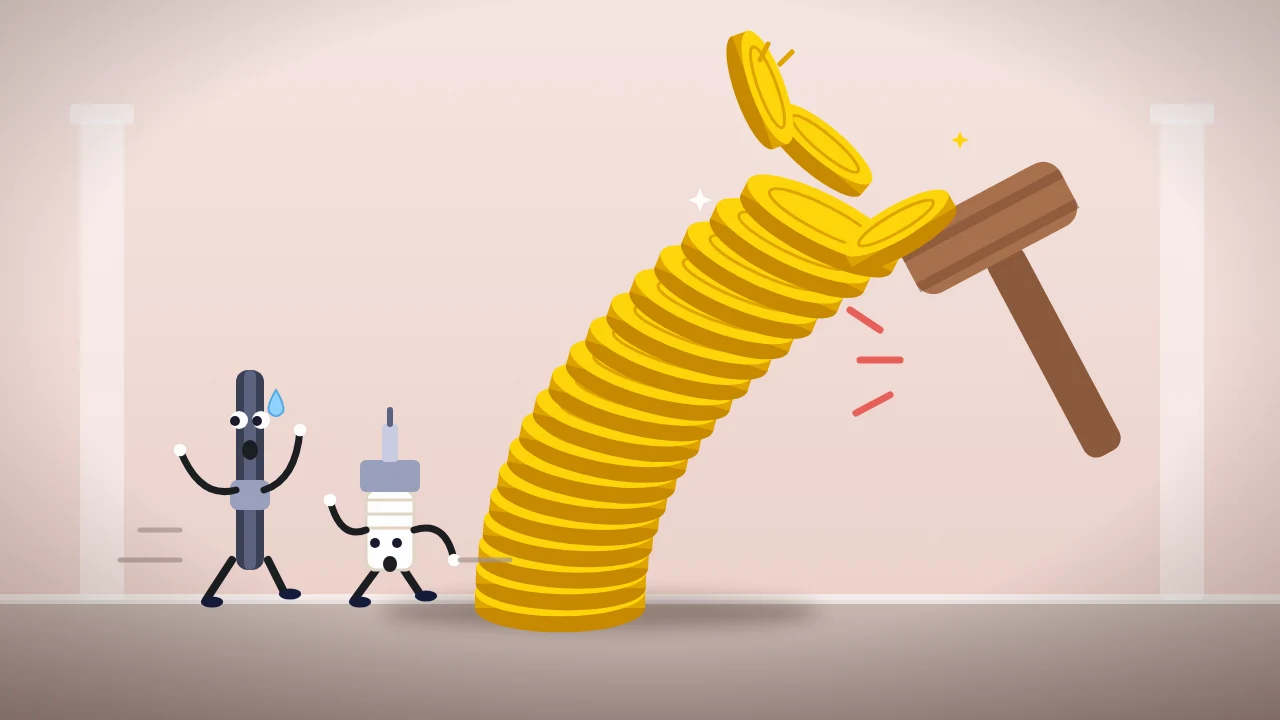
Here's the juicy one. First Brands makes car parts you've probably touched: TRICO wipers, FRAM filters, Autolite spark plugs. In autumn 2025 it filed for bankruptcy with more than $10 billion in debts. The allegation that stunned lenders: some of the same invoices had been used to back more than one loan, and some invoices may not have existed at all. A subprime car lender, Tricolor, collapsed around the same time.
One investor who said no to both was not surprised. "Those two were reasonably easy to spot," Todd Boehly told a conference in April. Easy to say afterwards, Todd. We'd all be rich with that kind of hindsight.
So what does it mean for you?
Most of these companies don't vanish. Many keep running while they fix their debts, so your wiper blades will still be on the shelf. But when big firms wobble, the people who lent them money feel it, and that can make loans tighter for everyone.
Next time a giant brand looks unbeatable, remember: a billion dollars can disappear faster than a parking space on a Saturday.