

Every crayon you ever chewed as a kid started the same way: as a hot, coloured soup. And there is a lot of soup. Crayola's factory in Easton, Pennsylvania makes about 12 million crayons a day, roughly 3 billion a year.
Only two ingredients
The recipe is almost boring. Paraffin wax and colour pigment, and the same base goes into every standard colour. Each shade gets either one pigment or a blend, measured out in advance.
Pour, wait, pop
The wax is melted, the pigment stirred in, and the hot mix is poured into moulding machines. Then everyone waits. The crayons need about 4 to 7 minutes to cool and go solid. A machine pushes them out of the moulds, and a robot arm lifts them onto a conveyor belt.
The paper jacket
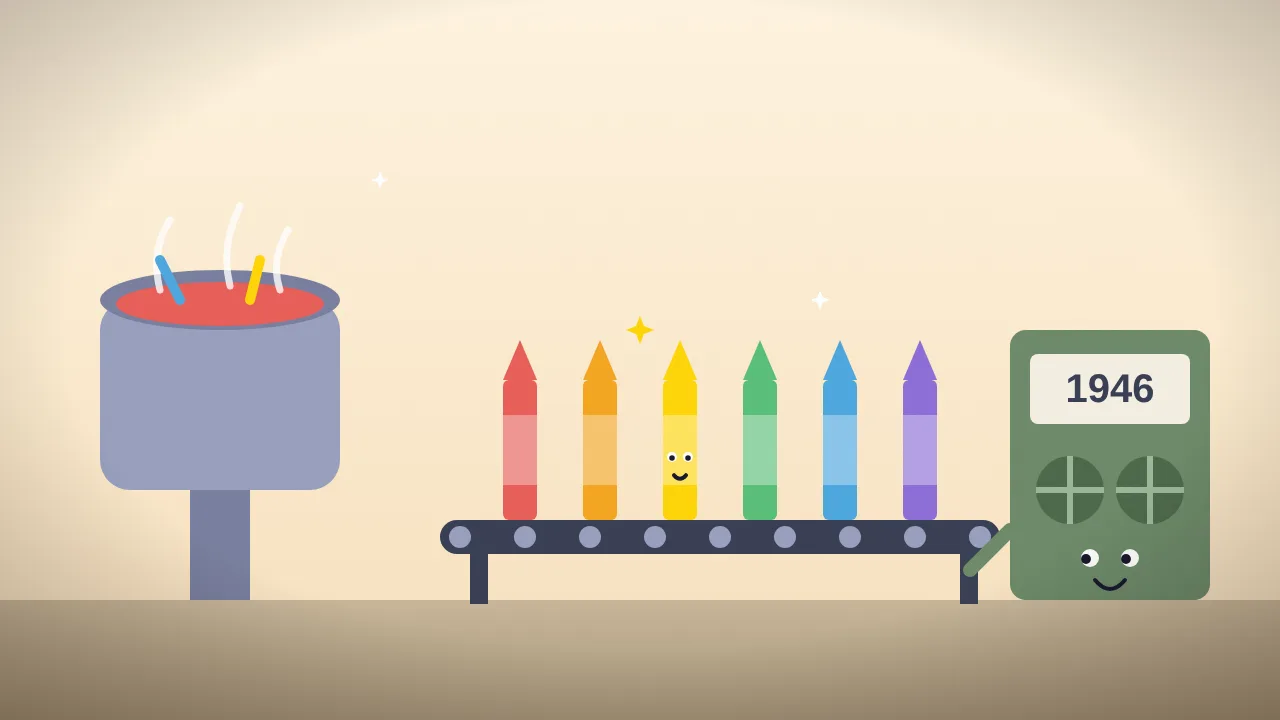
Next, a machine wraps a label around each one. Here's the fun bit: about a quarter of all crayons are still labelled on a "cut and stack" machine from 1946. It's older than most grandparents, and it still works every day.
Then a machine called a collator picks one crayon of each colour and drops them into the box. That's why you never find two reds and no blue. Well, unless your little brother got there first.
Broken ones get a second life
Inspectors pull out crayons that are broken or chipped, sort them by colour and melt them back down for new batches. Nothing goes to waste, not even the sad snapped ones.
About 1,200 people work in Easton. The boss, Peter Ruggiero, says many companies in the business "have decided to manufacture overseas", but Crayola kept its crayons in Pennsylvania. An engineer there summed up the job nicely: "It's a fun time to be in the crayon business".
Next time a crayon rolls under the sofa, give it some respect. It took a 1946 machine and seven minutes of cooling to get there.