

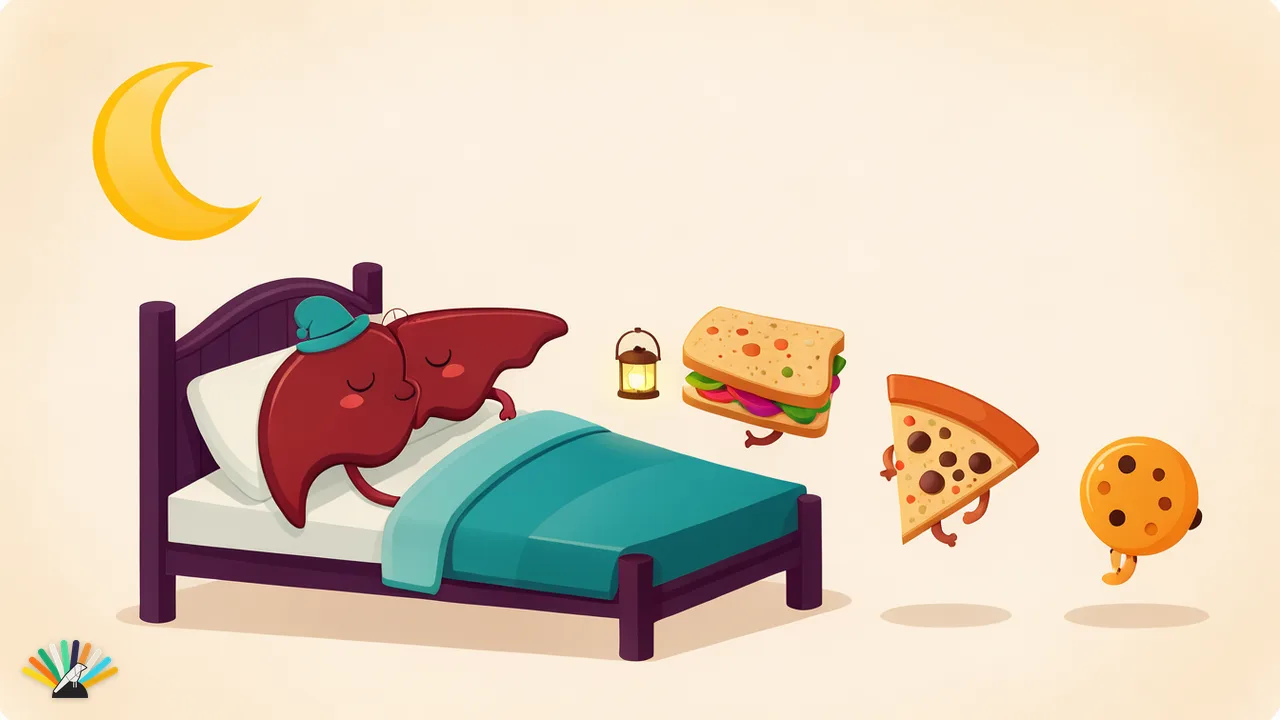
The fridge light at 11 p.m. is a small, familiar joy. A new study from Oregon Health & Science University (OHSU) suggests your liver may not share the enthusiasm.
What the researchers looked at
The team, led by liver specialist Robert Wilechansky, used data from three long-running US studies of nurses and health professionals: nearly 200,000 people in total. Participants reported when they usually ate. The researchers then checked who later developed liver disease, including fatty liver (now called MASLD) and cirrhosis.
The results were published in the journal Clinical Gastroenterology and Hepatology.
What they found
People who regularly ate after dinner or at bedtime had a 20% to 30% higher risk of liver disease than those who didn't.
Wilechansky says this is “among the first long-term analyses to explicitly draw the connection to fatty liver disease.” His colleague Andrew McHill, who studies sleep and body clocks, points out that eating against our internal clock has already been linked to obesity and diabetes, “and now poor liver health.”
The fine print
This is an observational study, and people reported their own eating times, which memory doesn't always get right. So it shows a link, not proof that late meals damage the liver. Night eaters may also differ in other ways, from sleep to stress.
OHSU is now recruiting for a trial to test whether moving meals earlier actually improves fatty liver. Until then, the researchers' own advice is gentle: “confining your calorie intake to several hours before bedtime might be beneficial.” The kitchen will still be there in the morning.