

If you've looked at laptop prices lately and thought "wasn't this cheaper last year?", you're not imagining it. And the culprit isn't your shop. It's artificial intelligence.
The chips everyone wants
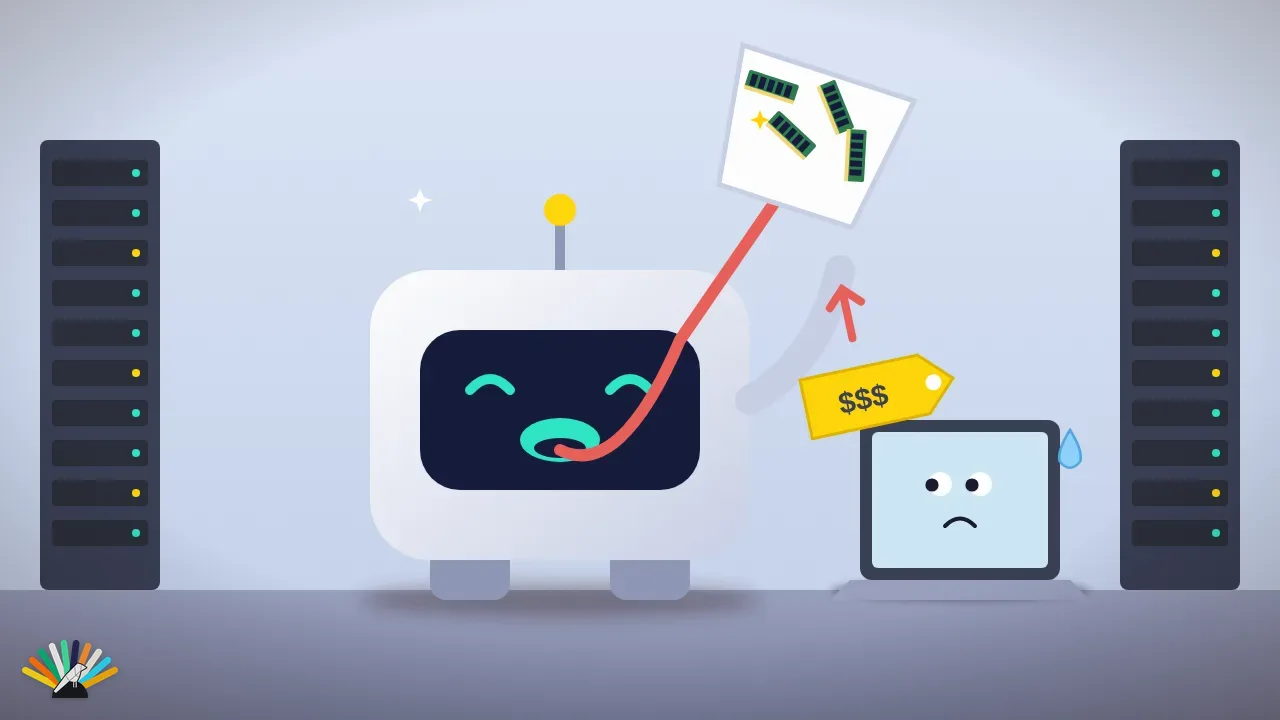
Every computer and phone needs memory: RAM, the short-term memory that lets it run apps, and storage, where your photos live. The same kind of chips also go into the huge data centres that run AI chatbots and image generators. And those data centres are hungry. Very, very hungry.
When AI companies buy memory by the mountain, there's less left for everyone else, and prices go up. Gartner analyst Namrata Banerjee said DRAM costs, a key type of memory, "surged five times year-over-year in the second quarter". That's not a typo. Five times.
The result: people stopped buying PCs
According to research firm Gartner, about 55.4 million PCs were shipped worldwide between July and September. That's down 22.4% from 71.3 million a year earlier, and roughly back to where the market was in early 2023.
"The impact of higher memory and storage costs is now fully reflected in PC pricing," Banerjee said, quoted by IT Pro and t2ONLINE. In plain words: the makers passed the higher costs on to you, and many people decided their old laptop could live another year.
Every big brand felt it. Gartner's figures show Lenovo, the market leader, down 22.4%, HP down almost 31% and Dell down about 25%. Apple held up best, down about 7%.
How much more are we paying?
There's no single number for every shop, but the forecasts aren't pretty. Back in August, Gartner predicted, as reported by ConsumerAffairs, that memory and storage prices combined would rise about 130% by the end of 2026 compared with 2025, pushing average PC prices around 17% higher.
Gartner also warned that the market for computers under $500 "could effectively disappear by 2028". That's the bit that hurts most: the cheap laptop for a student or a grandparent is the one being squeezed out.
Even Intel is feeling it
The pain reaches the companies making the processors too. On Friday, Intel's shares fell about 28%, according to Fox News, after a weak outlook for PC demand. CEO Lip-Bu Tan was frank: "We expect the current environment to persist until memory availability and prices begin to normalize."
So when will that be? Nobody knows. New memory factories take years to build.
What you can do
A few practical tips, from us, not from Gartner:
If your computer works, keep it. More RAM or a fresh battery can buy a laptop a couple more years, though even RAM sticks cost more now.
If you need a new one, look at last year's models and refurbished machines. Many were built before the price jumps.
And be honest about what you need. For email, browsing and video calls, a modest machine is plenty. You don't need a rocket to go to the corner shop.
Phones too?
Probably, yes. Back in February, Gartner already warned that surging memory costs would cut shipments of both PCs and smartphones in 2026. Phones use the same kind of memory chips, so the same squeeze applies. If a new phone is on your Christmas list, the same rule works: last year's model, or a good refurbished one, is often the smarter buy.
The irony
Here's the funny part, if you can call it funny. Many of the new laptops are sold as "AI PCs". The same AI boom that made them pricier is now the main thing written on the box. Marketing departments, we salute you.