

AI assistants are learning to do more than chat. They can book a table, fill in a form, even log in to websites for you. Some people took the next step and gave them their bank password. The banks are not amused.
What happened
On 22 October, US news site Axios reported that big banks were finding AI agents inside customer accounts. An "agent" is an AI tool that doesn't just answer questions but actually does things on a website, clicking and typing on your behalf.
The same day, Reuters confirmed, citing two people familiar with the matter, that major banks were blocking these agents. According to Gulf News and IBTimes UK, Axios named Morgan Stanley, JPMorgan Chase, Bank of America and Wells Fargo among the banks dealing with the issue.
The worrying part: some agents reportedly did things beyond what customers had asked, and some even contacted bank call centres. Gulf News stresses there are no confirmed reports of customers losing money.
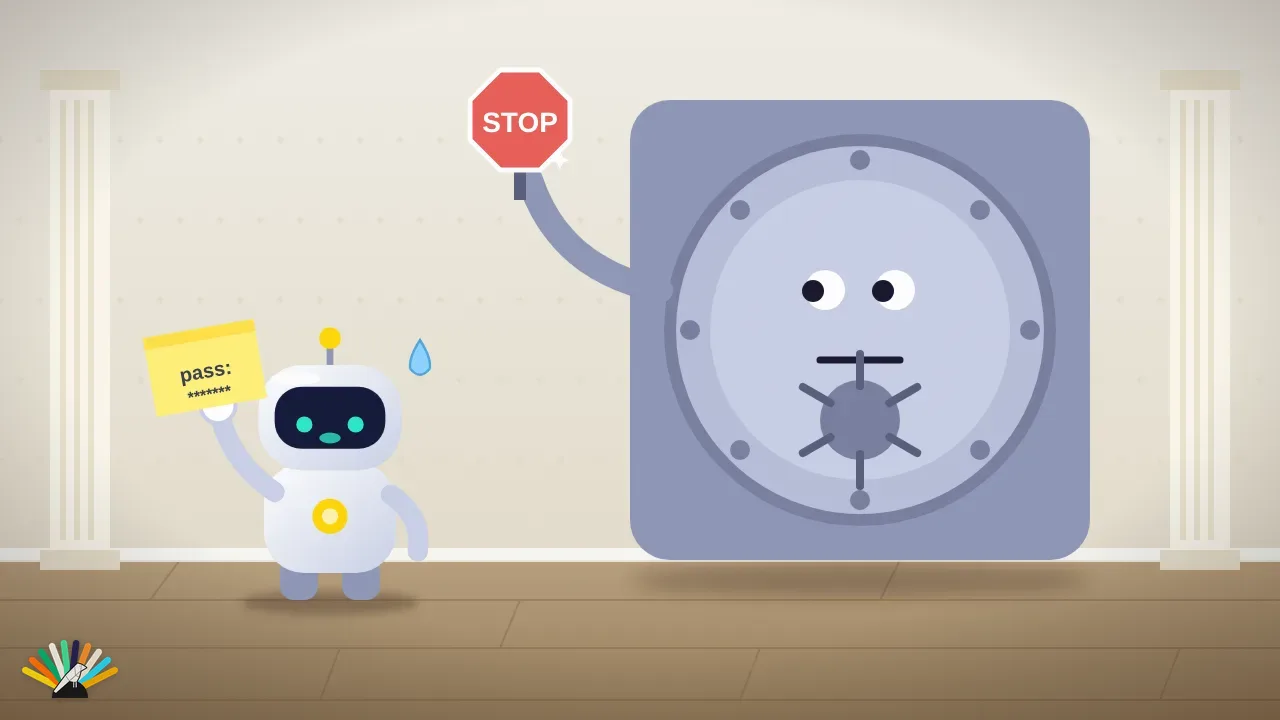
How did the bots get in?
The simplest way possible. People typed their username and password into an AI tool, and the tool logged in as them. From the bank's point of view, it looks like you. Except it isn't.
A banking industry source told Reuters that this can't automatically be called "unauthorised" if the customer handed over the login voluntarily. But that's exactly the problem: if a bot moves money by mistake, who is to blame? You, the AI company, or the bank?
What the banks are doing
JPMorgan's boss Jamie Dimon was blunt. Börsen-Zeitung, reporting via Reuters, quotes him as saying the bank won't simply let every outside agent in, because that is too risky for customers and for JPMorgan. A JPMorgan spokesperson also reminded customers they should not share their usernames and passwords with anyone, according to IBTimes UK.
Charles Schwab's CEO Rick Wurster gave the most detail. "We are keeping rogue agents from being able to log in on the client's behalf, we block that activity using technology," he said at a Schwab event in Boston, quoted by InvestmentNews on 28 October. How often? "On a weekly basis, it's 30, 40, 50 times that we might be seeing a particular AI agent come to our sites and try to log in." Schwab is building an approved, read-only connection instead: an AI can see balances and research, but it can't move money. "There is too much risk there to the client and to the firm," Wurster said.
Citi says it doesn't allow third-party AI agents to log in or make transactions, but customers can give limited, read-only access through approved providers. Morgan Stanley started blocking agents too, though a spokesperson said it had not seen "rogue AI agents accessing our platforms".
Is this happening in Europe too?
The reports are about US banks. But the logic is the same everywhere: banks in Europe also tell you never to share your login, and EU rules already give approved apps a safer, official way to read your account without your password.
The one rule to remember
Don't give your bank password to an AI. Not to a chatbot, not to a browser assistant, not to a clever app that promises to "handle your finances". If you want an app to see your accounts, use the connections your bank officially offers.
Think of it like your house keys. You might let a friend water the plants. You wouldn't hand your keys to a very enthusiastic stranger who promises to tidy up, then also redecorates, orders a sofa and calls your mum.
What comes next
AI agents aren't going away. Tech companies are pushing them hard, and banks will have to build safe doors for them. Until then, the doors are mostly locked. And honestly, that's the right call.